Who you are, in a form a machine trusts: structured data and consistent facts
An assistant has to decide that the company on your homepage, the one on LinkedIn and the one in a comparison article are the same company, and which facts about it are true. You can make that decision easy, or leave it to chance.
Say it in a form that cannot be misread
Structured data is a small block of JSON-LD in the page that states facts in a fixed vocabulary from schema.org. The most important type for a company is Organization: its name, website, logo, a one-sentence description, and sameAs, a list of its official profiles elsewhere.
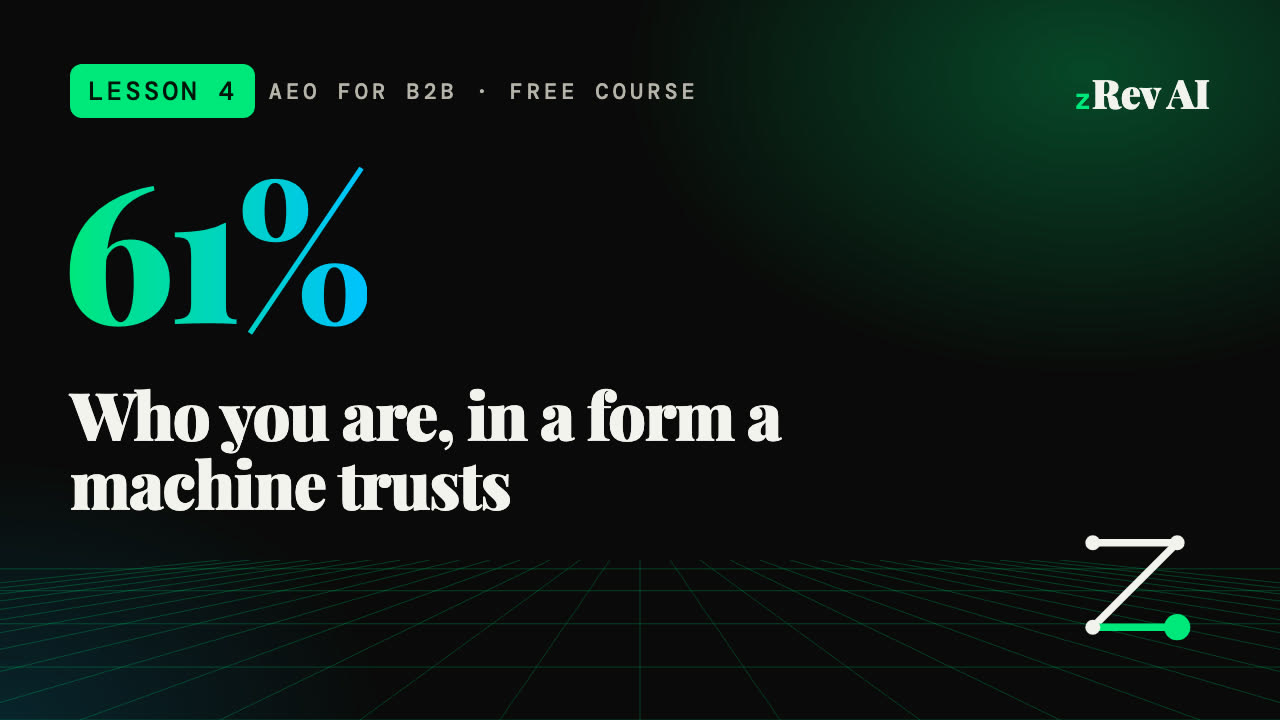
In our study, 76% of B2B software homepages carried structured data of some kind, but only 61% declared the Organization. Four in ten left the model to work out who they are from marketing copy.
A minimal Organization block
{
  "@context": "https://schema.org",
  "@type": "Organization",
  "name": "Acme",
  "url": "https://www.acme.com",
  "logo": "https://www.acme.com/logo.png",
  "description": "Acme is a lead routing tool for B2B sales teams on Salesforce.",
  "sameAs": [
    "https://www.linkedin.com/company/acme",
    "https://www.crunchbase.com/organization/acme"
  ]
}
Add Product, SoftwareApplication or Service for what you sell, FAQPage where you have real questions and answers, Article for articles and BreadcrumbList on inner pages. Never add ratings or reviews you do not have.
Your facts live on other sites too
Assistants learn about you from directories, review sites, LinkedIn, Crunchbase, Wikidata, analyst lists, comparison articles and community threads. When those sources disagree about what you do, your category, your size or where you are based, the model averages them or picks one, and it may pick the stale one.
Choose one plain description, one category and one set of basic facts, and use them everywhere you control. Then list those profiles in sameAs, so a machine can connect them to your site.
Be mentioned where shortlists are made
Shortlist answers lean on third-party pages: comparisons, curated lists, market maps, studies and threads where practitioners recommend tools. Original data, useful free tools and clear answers to common questions are what other people link to and cite. Being worth citing is the long game of AEO.
Paste your homepage URL into Google's Rich Results Test or the schema.org validator and check for an Organization. Then list your eight most important profiles (LinkedIn, Crunchbase, review sites, directories) and read the one-line description on each. Fix the ones that disagree.
Check yourself
0 / 3What is sameAs for?
sameAs ties your site to your official profiles elsewhere, so they are understood as one entity.
In our study, how many homepages had structured data, and how many declared the Organization?
Most had some structured data; far fewer said who they are.
You have no customer reviews yet. What should your structured data say about ratings?
Invented ratings mislead buyers, break search engines' rules and can cost you their trust.